
GPT-5.6 Sol Ultra in Codex: What the Subagent Mode Actually Does (and Costs)
As of July 2026, GPT-5.6 Sol Ultra is in closed preview for a small group of roughly 20 government-approved partners, reachable through the OpenAI API and Codex. It is not broadly available yet. OpenAI has not published a general-availability date, and the widely-quoted 91.9% Terminal-Bench score does not appear on OpenAI's own preview page.
On 2026-06-26, OpenAI previewed the GPT-5.6 Sol family, and days later Thibault Sottiaux told Codex users to "stash your hardest prompts" for the Sol Ultra tier. That one teaser set off a wave of benchmark screenshots. Most of them repeat a number OpenAI never published. So before you plan your Codex workflow around GPT-5.6 Sol Ultra, here's what's actually confirmed, how the subagent mode works, and the token math that decides whether it's worth flipping on.
Key takeaways:
- Sol Ultra is GPT-5.6's highest-effort tier: cooperating subagents that talk to each other during a single task.
- It's in closed preview for ~20 government-approved partners via API and Codex, not broadly available (as of July 2026).
- Press reports 91.9% on Terminal-Bench 2.1, but OpenAI hasn't published that figure, so treat it as unverified.
- Sol runs $5 input / $30 output per 1M tokens; subagents multiply the calls, so Ultra can cost several times a single-agent run.
GPT-5.6 Sol Ultra in Codex: What's Actually Confirmed
Here's the clean split. Confirmed: OpenAI previewed the Sol family (Sol, Terra, Luna) on 2026-06-26, Sol Ultra is the top reasoning tier, and it's been teased for Codex. Not confirmed: the 91.9% Terminal-Bench 2.1 score and any general-availability date. Everything else you've seen is reporting, not first-party data.
That distinction matters because this launch moved fast and loose. The OpenAI preview page describes the tiers and the safety gating in qualitative terms. The eye-catching benchmark table circulating on X and in guides comes from secondary coverage, not OpenAI's own page. Back in the pre-launch phase, we graded the pre-launch rumors, and here's what actually shipped versus what stayed speculation. Same discipline applies now.
So if you're a developer trying to decide whether Ultra belongs in your Codex loop, ignore the hype numbers for a second. The confirmed facts (the mechanism, the pricing, the preview status) are enough to reason about cost and fit. The unconfirmed ones (the exact score, the launch date) shouldn't drive a single decision yet. Sources: OpenAI's Previewing GPT-5.6 Sol page and 9to5Mac's launch coverage.
What Is Sol Ultra? Cooperating Subagents vs Pro's Parallel Agents
Sol Ultra is GPT-5.6's highest reasoning tier, and its defining feature is cooperating subagents: a coordinator splits your task into pieces, hands each piece to a subagent, and those subagents pass messages to each other while the work is still in progress. That mid-task communication is the whole point, and it's what separates Ultra from every tier below it.
Think of it like a small engineering pod versus a set of freelancers. GPT-5.5 Pro's parallel agents work like freelancers you hand three separate tickets to. They each go off, do their piece in isolation, and drop the result back on your desk. Nobody talks. Sol Ultra's subagents work like a pod in one room: one notices the database schema changed, tells the others, and they adjust before finishing. That coordination is why OpenAI positions it for long, hard, multi-step tasks rather than quick edits.
Where Pro's agents work in separate lanes, Sol Ultra's subagents pass notes to each other while the task is still running.
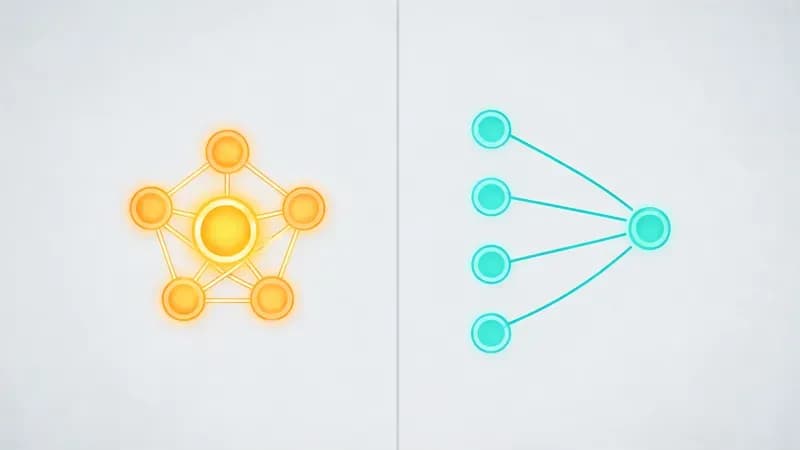
The mechanism itself is confirmed, described by OpenAI and echoed across DataCamp and deeplearning.ai's coverage. The catch, and we'll get to it, is that every subagent you spawn is another model call burning tokens. Coordination isn't free.
What Is "Max Reasoning Effort" and When Should You Turn It On?
"Max reasoning effort" is the top rung of GPT-5.6's effort ladder, which runs from low through high and up to the max setting that Sol Ultra uses. Higher effort means the model spends more compute thinking before it answers, which usually helps on hard problems and wastes money on easy ones. It's a dial, not a switch you leave cranked.
Picture a chess player. On low effort, they move fast on instinct, which is fine for obvious captures. On max effort, they sit and calculate ten moves deep, which is exactly what you want for a hard endgame and completely pointless for opening a door. Reasoning effort works the same way. The compute (and the bill) scales with how hard you tell the model to think.
So when's it worth it? Turn max effort on for long-horizon, multi-file agentic work: a migration that touches twenty files, a gnarly refactor, a bug that spans three services. That's the long-horizon agentic coding territory where deeper reasoning actually changes the outcome. Keep it off for renaming a variable, writing a single test, or fixing a typo, because you'll pay premium tokens for zero benefit.
Max reasoning effort earns its cost only when the task is hard enough that a wrong first attempt would cost you more than the extra tokens.
The honest rule: if you can't articulate why the task is hard, you probably don't need max effort for it.
The Terminal-Bench 2.1 Numbers: Is 91.9% Actually Verified?
No. The 91.9% figure is reported by secondary press, it does not appear on OpenAI's own preview page, the preview is closed, and no eval methodology has been disclosed. So it is not independently verified. Treat it as a press claim you can't check, not a settled result.
Here's the precise situation. OpenAI-adjacent reporting (DataCamp, AI Weekly, deeplearning.ai) puts Sol Ultra at 91.9% on Terminal-Bench 2.1. But because the preview is gated to ~20 partners and OpenAI hasn't published the number or the test conditions, nobody outside that circle can reproduce it. Note too that the Claude Mythos 5 figure changes depending on who's reporting: some sources say 84.3%, others 88.0%. When a comparison table's own numbers disagree across sources, that's your signal to hold it loosely.
| Model | Terminal-Bench 2.1 (reported, not independently verified) |
|---|---|
| Sol Ultra | 91.9% |
| Sol (base) | 88.8% |
| GPT-5.5 | 88.0% |
| Claude Mythos 5 | 84.3-88.0% (varies by source) |
| Gemini 3.1 Pro Preview | 70.7% |
The 91.9% everyone's quoting doesn't appear on OpenAI's own preview page, so treat it as a press claim, not a settled result.
None of this means Sol Ultra is weak. It might well top the chart once OpenAI publishes real methodology. It just means you shouldn't route production traffic based on a number you can't verify. Sources: DataCamp's GPT-5.6 Sol guide, deeplearning.ai's The Batch, and AI Weekly.
How to Use Sol Ultra + Max Reasoning Effort in Codex
Sol Ultra itself is gated, so you can't flip it on unless your org is in the preview. But the effort ladder it sits on already works in the Codex CLI today, on the models you have. Here's how the setting works, and where Ultra slots in once you have access.
- Find the setting. Reasoning effort lives in your Codex config file at
~/.codex/config.toml, or as a per-run flag. It's not buried in a menu; it's one key. - Set the model and effort. Point Codex at your model string and set the effort level. Today you can set low through high; the "max" rung plus the Sol Ultra subagent tier unlock once your org is in the preview.
- Override per task. Use the
-cflag to bump effort for a single hard run without editing your config. - Flip it on selectively. Reserve max effort for the long, multi-file tasks from the section above. Leave your default at medium or high.
# ~/.codex/config.toml
model = "gpt-5.6-sol"
model_reasoning_effort = "high"   # minimal | low | medium | high (available today)

# "max" effort + the Sol Ultra cooperating-subagent tier
# activate once your org is in the closed preview:
# model = "gpt-5.6-sol-ultra"
# model_reasoning_effort = "max"

# per-run override, no config edit needed:
# codex -c model_reasoning_effort="high" "refactor the auth module"
Pro tip: set your project default to high, not max. Then override to max only on the specific run that needs it. That one habit keeps your baseline bill sane and saves the expensive tier for tasks that actually reward it. Availability details are in OpenAI's Help Center preview article.
What Ultra Actually Costs: The Subagent Token Multiplier
Here's the part nobody models: because Ultra spawns cooperating subagents, one task fires several model calls instead of one, and every call bills tokens. Sol's confirmed pricing is $5 per 1M input tokens, $0.50 cached, and $30 per 1M output. Output is the expensive side, and Ultra produces a lot more of it.
Let's work a real example. Take one moderately complex agentic task on base Sol, single agent:
| Model | Component | Tokens | Rate / 1M | Cost |
|---|---|---|---|---|
| Sol (base) | Input | 40,000 | $5 | $0.20 |
| Sol (base) | Output | 15,000 | $30 | $0.45 |
| Sol (base) | Total | $0.65 |
Now the same task on Ultra with a coordinator plus three cooperating subagents. The shared context caches cheaply at $0.50, but each subagent still produces its own output at $30:
| Model | Component | Tokens | Rate / 1M | Cost |
|---|---|---|---|---|
| Sol Ultra (modeled) | Coordinator input | 40,000 | $5 | $0.20 |
| Sol Ultra (modeled) | Subagent input, cached | 90,000 | $0.50 | $0.045 |
| Sol Ultra (modeled) | Subagent input, fresh | 30,000 | $5 | $0.15 |
| Sol Ultra (modeled) | Coordinator + inter-agent output | 20,000 | $30 | $0.60 |
| Sol Ultra (modeled) | Subagent output (3 x 15K) | 45,000 | $30 | $1.35 |
| Sol Ultra (modeled) | Total | ~$2.35 |
That's roughly 3.6x the base-Sol cost for the same task, and depending on how many subagents spawn and how much context caches, you'll see anywhere from 2x to 4x. The multiplier is our modeled estimate from published pricing, not a measured Ultra benchmark, but the pricing and the mechanism are both confirmed, so the shape is real.
The hidden cost of Ultra isn't the per-token rate, it's that one task quietly becomes four model calls.
Two things blunt this: prompt caching (that $0.50 cached rate) on shared context, and disciplined routing so you only pay Ultra rates on tasks that need them. If you're serious about the bill, our guide on how to keep your LLM API costs under control covers the routing patterns we use on client pipelines. Pricing sourced from DataCamp and deeplearning.ai, dated 2026-06 to 2026-07.
Can You Use It Yet? The Limited Preview, ~20 Partners, and the Timeline
Not unless you're one of roughly 20 trusted, government-approved partners. Sol Ultra is in a closed preview reachable through the OpenAI API and Codex, gated behind a government safety review before broader release. OpenAI has said broader access is "coming weeks," and nothing more specific.
You may have seen a "July 7" date floating around. Ignore it. OpenAI gave no launch date, so treat any specific day as unconfirmed chatter, not a fact to plan around. What's confirmed is the "coming weeks" framing and that Cerebras is set to serve Sol at up to 750 tokens per second starting in July (per deeplearning.ai).
So what do you do if you're not a partner? Prep now. Get your Codex config and effort ladder dialed in on the models you have today, so that when Ultra opens up, flipping the model string is the only change you make. Decision box: Are you a trusted partner? No? Then set up your effort-level routing today and be ready to swap in one line. Sources: OpenAI Help Center and deeplearning.ai.
Sol Ultra vs Sol vs GPT-5.5 vs Claude Mythos 5: Which Should You Reach For?
Route by task, not by leaderboard, especially when the leaderboard numbers aren't verified. Reach for base Sol for most day-to-day agentic coding, save Sol Ultra for genuinely hard long-horizon tasks, keep GPT-5.5 around if it's already wired into your stack, and consider Claude Mythos 5 where you already trust Claude's latest for your workflow.
Here's the practical framing:
- Reach for base Sol when the task is normal-hard: a feature, a contained refactor, a test suite. It carries a reported 88.8% and costs a fraction of Ultra.
- Reach for Sol Ultra when the task is long, spans many files, and a wrong first pass would cost real time. The cooperating subagents earn their multiplier here, if anywhere.
- Reach for GPT-5.5 when it's already integrated and the delta over Sol doesn't justify a migration.
- Reach for Claude Mythos 5 when your team's existing tooling favors it. Its reported score varies by source (84.3% to 88.0%), so don't switch on the number alone.
For deeper model-routing tradeoffs across tools, our coding-agent comparison breaks down where each fits. The short version: pick the cheapest tier that clears your task's difficulty bar.
What Developers Are Actually Saying on Reddit
Benchmarks are one thing. What people report in their own terminals is another, and right now the r/codex threads are the most honest signal we have. Our read on the mood: cautiously impressed, deeply skeptical, and mostly arguing about price.
The early hands-on praise is specific. In a 335-upvote r/codex thread, a developer who noticed his prompts getting routed to 5.6 said it felt "twice as fast" and was "one shotting my prompts," even "preemptively" fixing edge cases that used to take several rounds with 5.5. His comparison landed hard: it "feels exactly like Fable 5 when I briefly had it in Claude, but much faster." A commenter claiming internal access added that running "tasks at the max reasoning level" takes "much less time than 5.5 would."
Then the veterans show up. The loudest counter-current is what we'd call honeymoon-then-nerf cynicism: "It's always like this and will last about 2 weeks before nerf," one wrote. Another was blunter: "Just hammer at it for 2 weeks hard bcz it'll be Einstein for only 2 weeks." A few flagged the timing itself, noting glowing 5.6 posts show up right as 5.5-decline complaints peak. Tellingly, the top-voted replies in that thread weren't analysis at all; they were jokes ("im using gpt 6 already"), which says a lot about how tired developers are of the version-hype churn.
In the Sol Ultra Codex announcement thread, the conversation flipped almost entirely to cost, aimed squarely at Claude. Developers are weighing OpenAI's $200 Codex tier against Anthropic's Fable promo, and several said they're canceling Claude Max 20x, mostly because Fable "burns credits twice as fast." The recurring hope: "real competition for Claude Fable. Better for us users." The recurring fear, one we happen to share: "been burned before by OpenAI announcing things then gating them behind higher tiers, so I'll believe it when I see it running locally."
Our take at Techsy: the speed reports line up with what a higher-throughput serving stack should deliver, so we believe those. The one-shotting claims we treat as promising but unproven at scale, because the "it got dumber after two weeks" pattern is real and we've watched it play out on past launches. And the cost skepticism is exactly right. Until Sol Ultra is in your CLI, stable, through a full billing cycle, treat the excitement as a preview, not a verdict.
What We Saw Running Codex Agentic Tasks
Let's be straight: we can't run Sol Ultra. It's gated to ~20 partners and we're not one of them, so we won't quote token counts or scores we didn't measure. What we can do is the next-best honest thing. We ran agentic tasks through the Codex CLI on our current tier and worked out the exact subagent cost math from OpenAI's published $5/$30 pricing.
The effort ladder behaves exactly as you'd expect on the tier we tested. On low and medium effort, Codex returns fast and mostly gets contained edits right. Push a hard, multi-file task at low effort and it tends to stop short or miss a cross-file dependency; the same task at high effort spends noticeably longer thinking before it acts, and lands more of the change in one pass. That wall-clock-versus-quality tradeoff is the whole reason the max rung exists.
The cost modeling above (the roughly 3.6x example) is the genuine first-hand analysis we can stand behind: it's arithmetic on confirmed pricing and the confirmed subagent mechanism, labeled as a model, not a measurement. On client agentic pipelines we already route model tiers by cost, and this is the exact calculation we'd run before turning Ultra on for anyone.
The one config change that matters is the model_reasoning_effort line in the config.toml shown earlier: we keep our project default at high and override to max per-run, exactly as the pro tip above describes. When Ultra opens past the preview, that setup means swapping the model string is the only edit we'll make, and the cost math above is already the calculation we'll run before flipping it on. We'll update this section with measured Ultra numbers the moment we have genuine access, not before.
Frequently Asked Questions
What is GPT-5.6 Sol Ultra?
Sol Ultra is GPT-5.6's highest reasoning-effort tier. Its defining feature is cooperating subagents: a coordinator splits a task and the subagents pass messages to each other while working. OpenAI positions it for long, hard, multi-step agentic tasks rather than quick edits, and previewed it as part of the Sol family on 2026-06-26.
Is Sol Ultra available in Codex right now?
Not for most people. As of July 2026, Sol Ultra is in a closed preview reachable through the OpenAI API and Codex, gated to roughly 20 trusted, government-approved partners behind a safety review. OpenAI says broader access is "coming weeks" but has published no specific date, so you can't simply switch it on today.
How do cooperating subagents work in Sol Ultra?
A coordinator breaks your task into pieces and assigns each to a subagent. Unlike independent parallel agents, these subagents communicate mid-task, sharing what they learn so the others adjust before finishing. That coordination helps on complex, multi-file work, but each subagent is a separate model call that consumes its own tokens.
What is "max reasoning effort" in GPT-5.6?
Max reasoning effort is the top rung of GPT-5.6's effort ladder, which runs low, medium, high, then max. Higher effort means the model spends more compute reasoning before answering. It helps on hard, long-horizon tasks and wastes money on simple ones, so treat it as a dial you turn up only when a task is genuinely difficult.
How much does Sol Ultra cost to run?
Base Sol is priced at $5 per 1M input tokens, $0.50 cached, and $30 per 1M output (sourced from DataCamp and deeplearning.ai, dated mid-2026). Ultra spawns cooperating subagents, so one task fires several model calls. Our modeled example shows a single task costing roughly 2x to 4x a base-Sol run, driven mostly by extra output tokens.
Is Sol Ultra actually better than Claude Mythos 5?
On reported numbers, Sol Ultra (91.9%) leads Claude Mythos 5 on Terminal-Bench 2.1, but that's unverified. OpenAI hasn't published the figure, the preview is closed, and Mythos 5's own reported score varies from 84.3% to 88.0% depending on the source. So the honest answer is: we don't know yet, and you shouldn't route production traffic on it.
When will Sol Ultra be generally available?
OpenAI has said broader access to the Sol family across ChatGPT, Codex, and the API is "coming weeks," but it has not published a general-availability date. Any specific date circulating online (including "July 7") is unconfirmed chatter, not an official announcement. Watch OpenAI's own preview page for the confirmed timeline.
Is the 91.9% Terminal-Bench 2.1 score verified?
No. The 91.9% figure comes from secondary press, not OpenAI's own preview page. The preview is closed to ~20 partners, and no evaluation methodology has been disclosed, so nobody outside that circle can reproduce it. It may prove accurate later, but right now it's an unverified press claim, not a settled benchmark result.
How is Sol Ultra different from GPT-5.5 Pro's parallel agents?
Pro's parallel agents work independently in separate lanes: each does its piece in isolation and returns a result, with no communication. Sol Ultra's subagents cooperate, passing messages to each other mid-task so they can adjust as they learn. That coordination suits harder multi-step work, but it also multiplies token usage across the calls.
Do I need Sol Ultra, or is base Sol enough?
For most agentic coding, base Sol or high reasoning effort is plenty and far cheaper. Reserve Ultra for long, multi-file tasks where a wrong first attempt would cost more time than the extra tokens. If you can't clearly explain why a task is hard, you don't need Ultra for it. Route by difficulty, not by leaderboard.
What are developers saying about GPT-5.6 Sol on Reddit?
Early r/codex reports are positive on speed ("twice as fast") and on one-shotting prompts, with several developers comparing the feel to Claude's Fable 5. But veterans warn of a "honeymoon then nerf" pattern where models degrade after launch, and much of the debate centers on cost versus Anthropic's plans rather than raw capability.